
Contact us
- Cēsu nov., Zosēnu pag., "Sniegumi", LV-4133
- +37125543668
- sniegumi@gmail.com
- LV40203336838
- AS "Citadele banka", LV51PARX0027168240001
How to adapt a flower bed plan to fit your ga
How to adapt a flower bed plan to fit your garden
If a ready-made planting plan is designed for a five-metre bed and you only have one and a half metres to work with, start by checking the size of the plants. Reducing the number of plants is only part of the job. You also need to consider how much space each plant will take up at maturity.
In a smaller bed, check plant height and spread
In a five-metre bed, a tall miscanthus can form a backdrop with room for several groups of shorter plants in front. In a shallow bed just one and a half metres long, the same grass can take up much of the planting area and hide lower plants. The same can happen with other perennials whose flower stems reach over a metre.
If you want to keep the airy silhouette of an ornamental grass, choose a shorter, more compact variety with a similar shape. Check both the mature height in flower and the spread of the clump. Even a short plant can take up considerable space if it forms a wide clump.
A single tall, slender plant can make a striking focal point in a small bed. To decide whether it fits, consider the depth of the bed from front to back, the plants around it and the direction from which you’ll usually see it.
If you’re looking for a ready-made planting plan for a small bed near the house, take a look at Golden Harmony, Purple Dream and Seaside Flower Bed. These plans feature shorter plants. Before choosing one, check whether the mature plant sizes and growing requirements suit your garden.
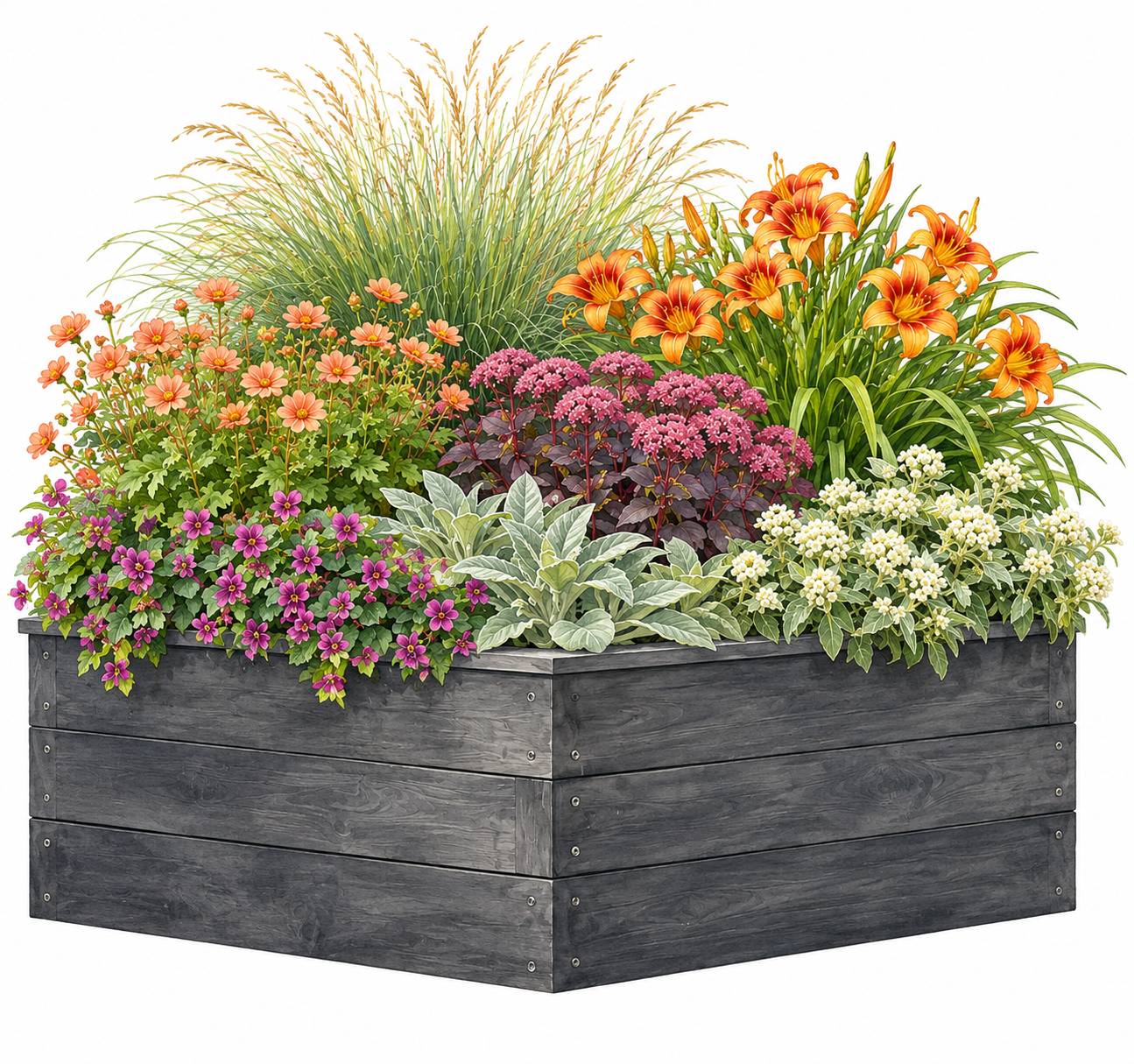
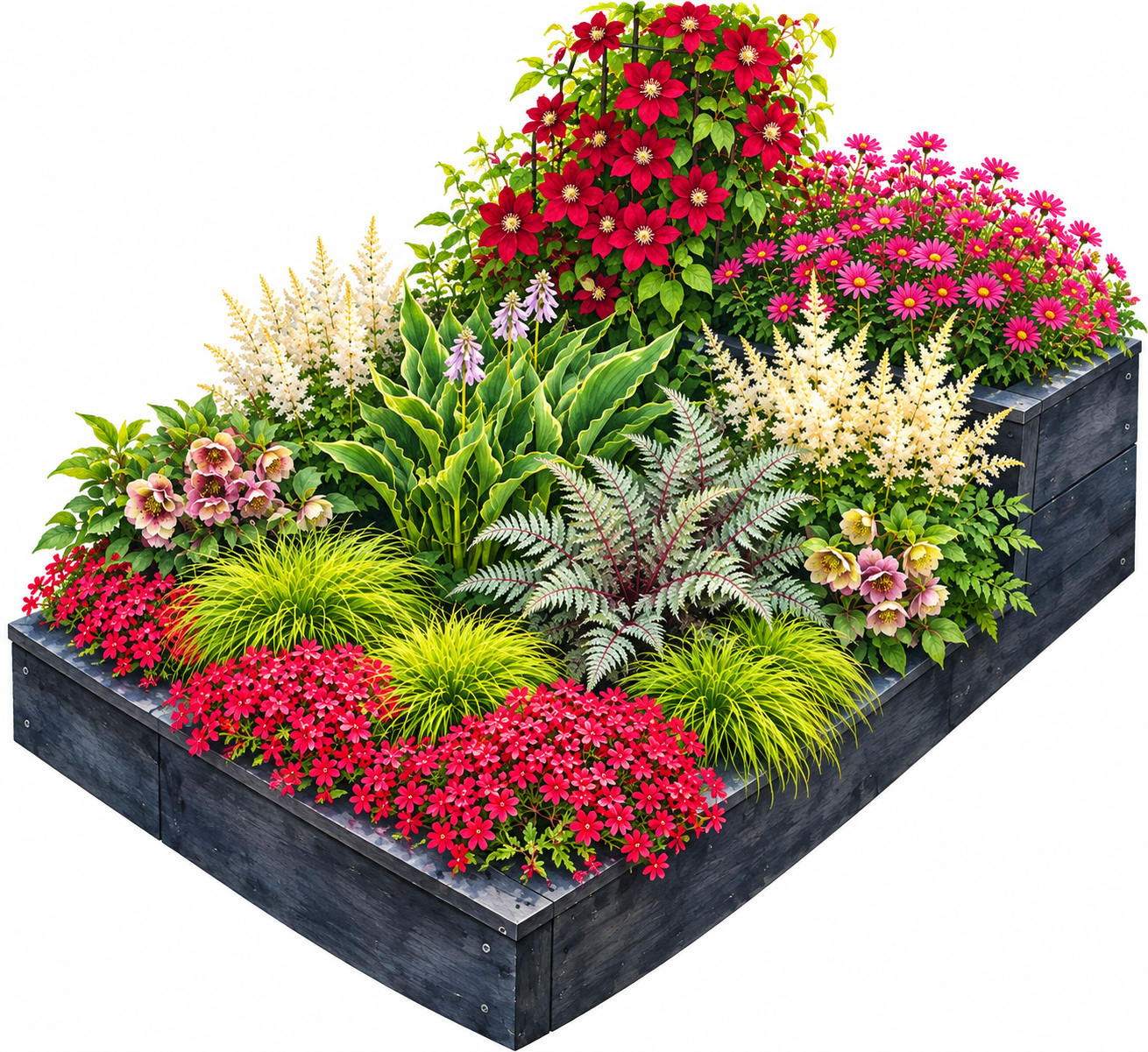
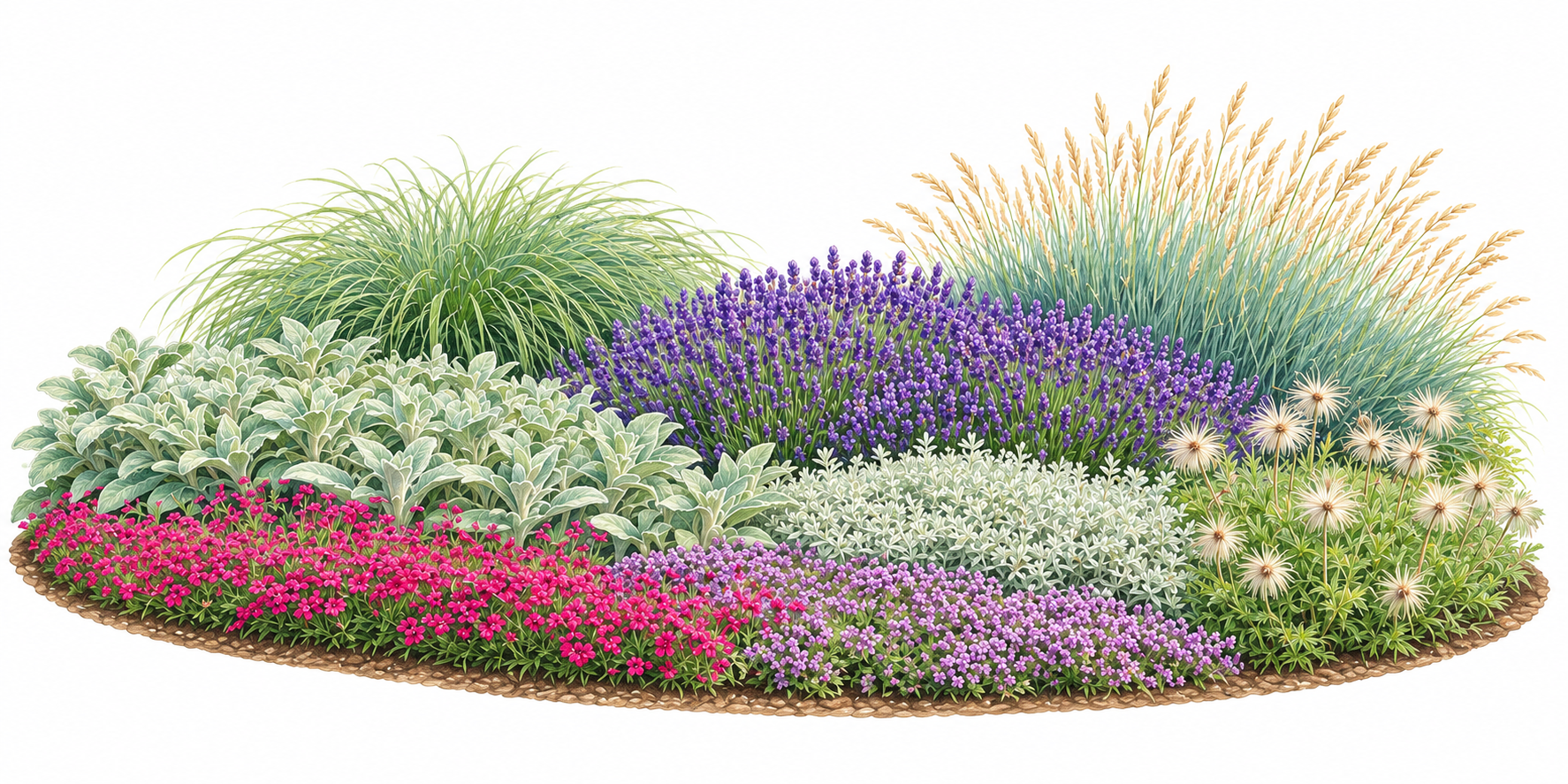
In a larger bed, use a range of heights
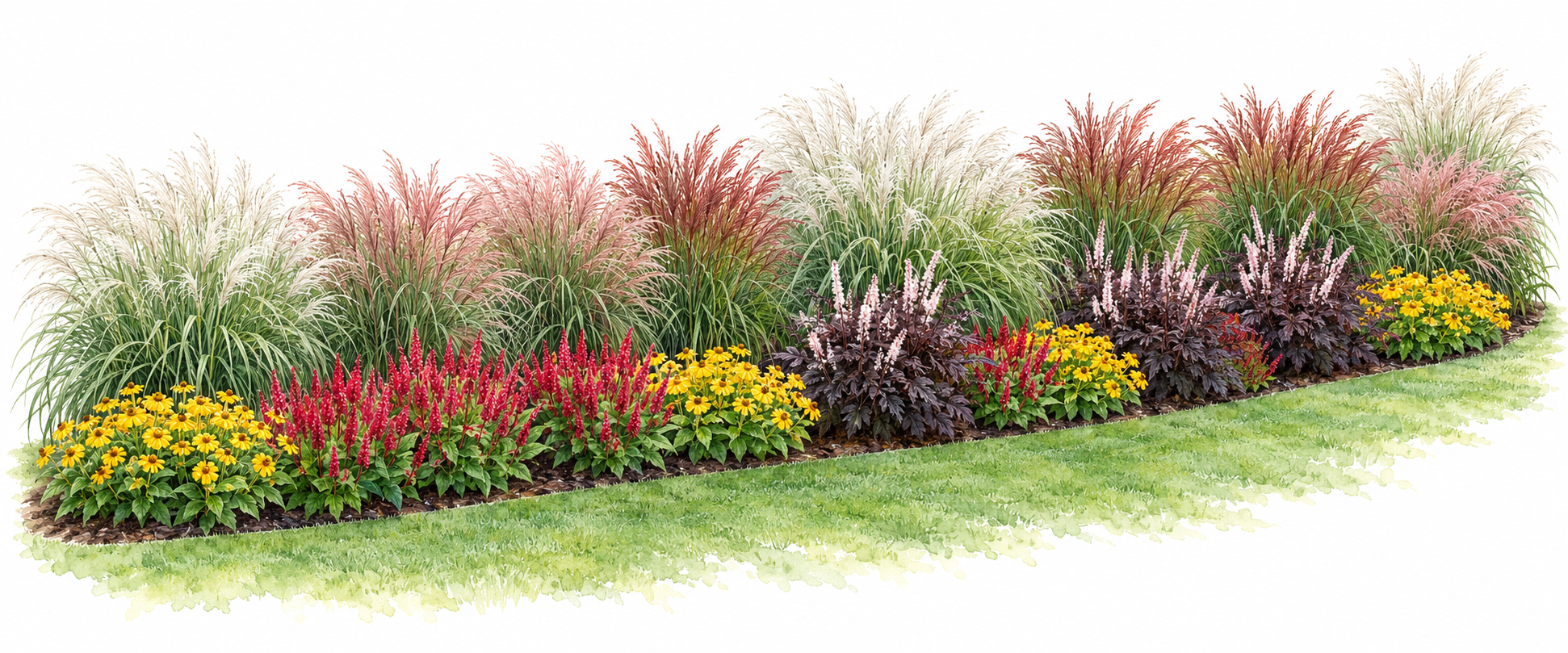
In a larger bed, low-growing plants work well along the front edge, with taller groups of perennials or ornamental grasses farther from the main viewing point. If you usually see the bed from a patio or a window, larger groups will be easier to pick out from a distance than individual plants.
If there’s enough room, a shrub or small tree can serve as the focal point, with the rest of the planting arranged around it. Before choosing one, check how wide its canopy will grow and consider how the shade it casts will change the growing conditions in the bed over time.
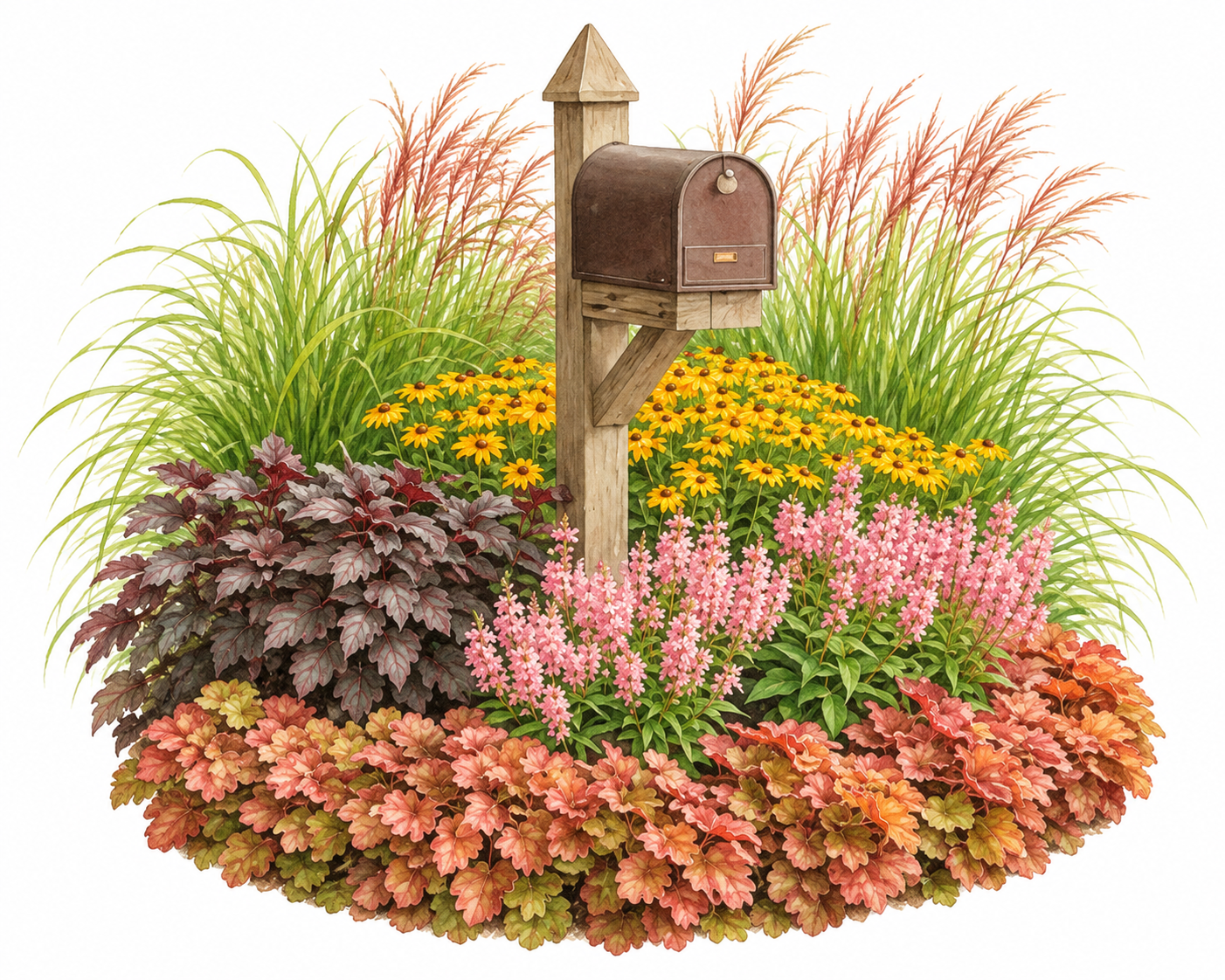
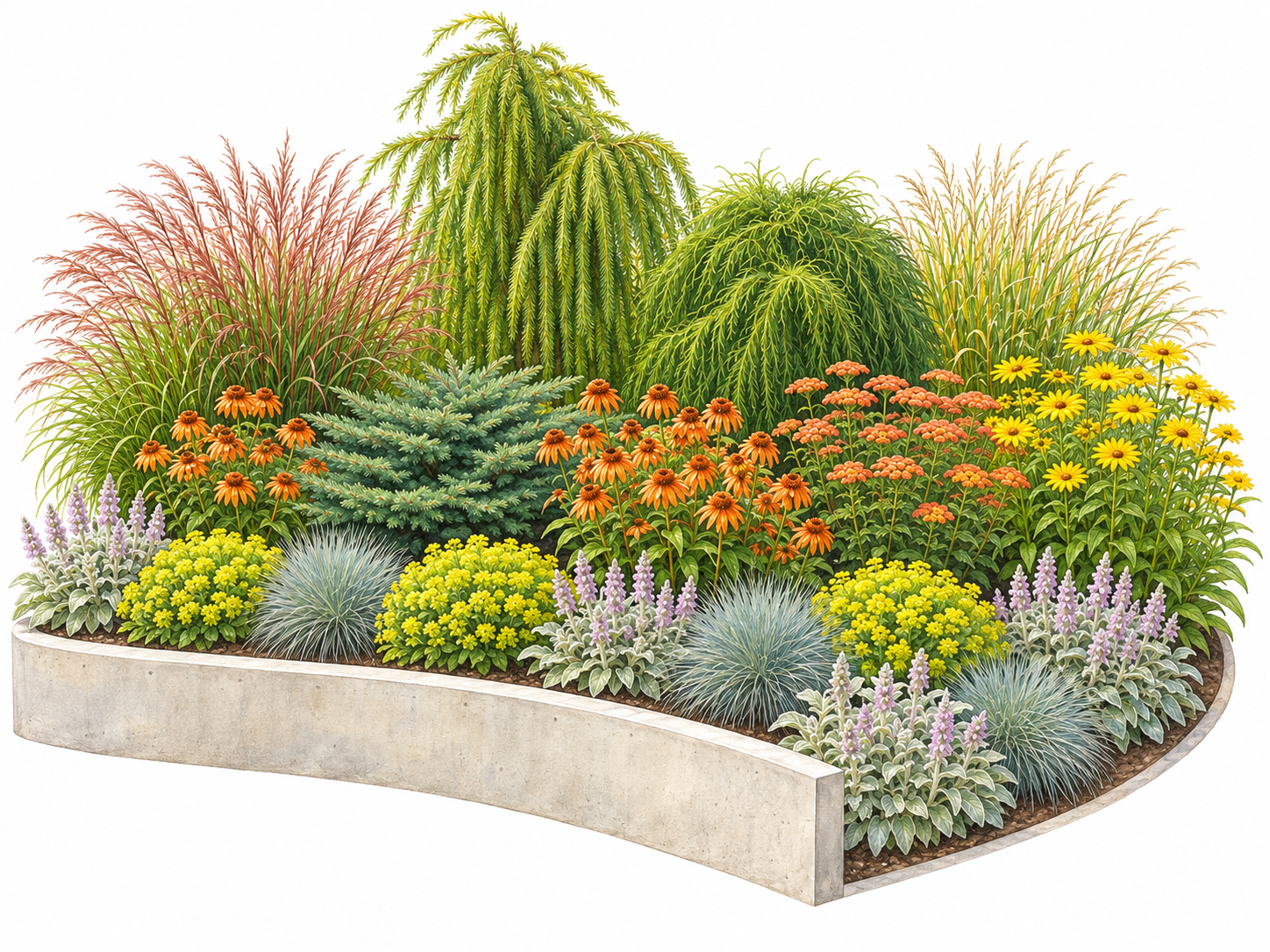
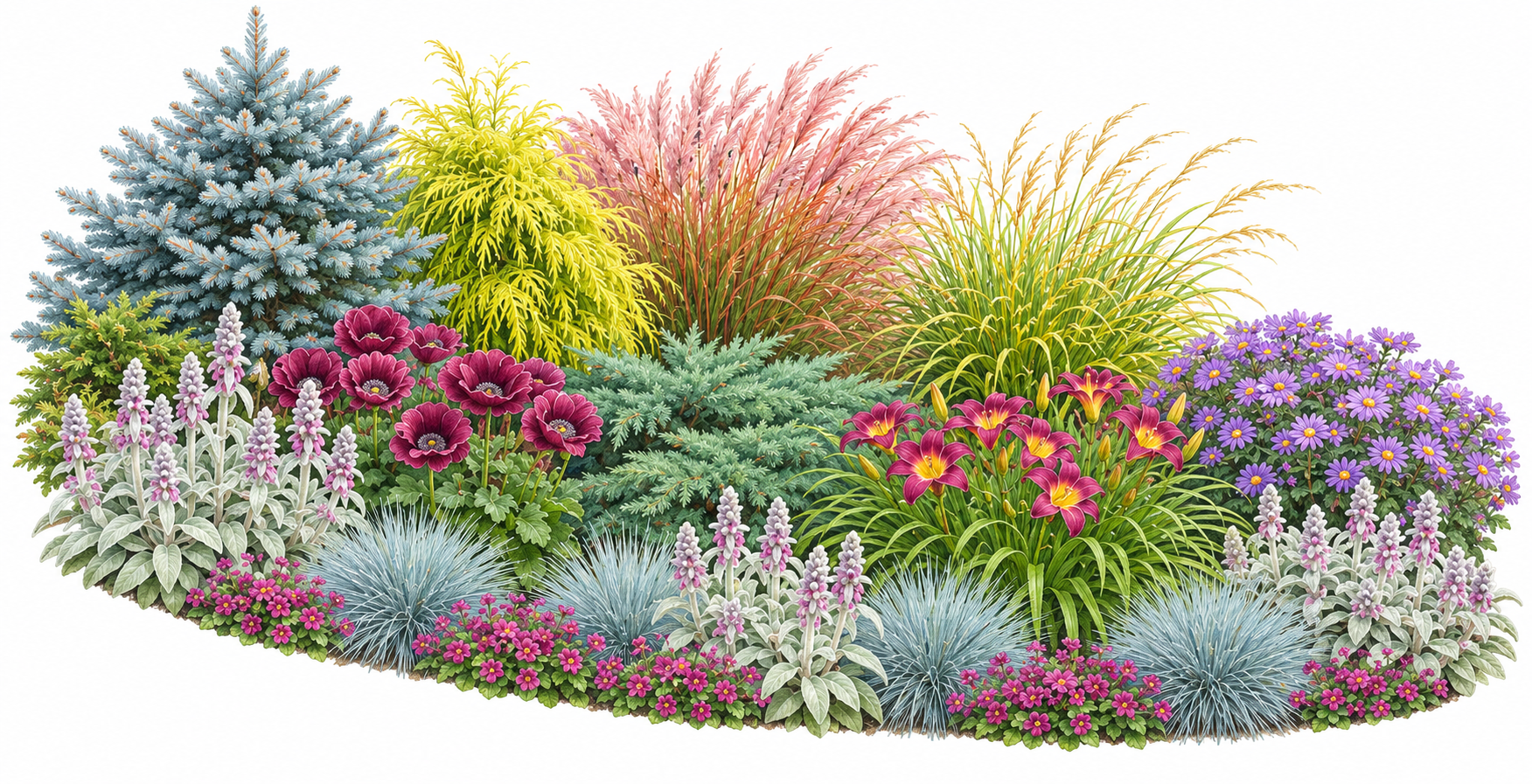
If you have room for tall, broad clumps of ornamental grass, take a look at Ornamental Grass Border, Morning Breeze, Sunset Flower Bed and Silvery Flower Bed. Tall ornamental grasses give these plantings their silhouette. If the bed is mostly viewed from one side, place the grasses towards the back to leave room for shorter plants in front.
What to check before buying plants
- Measure the bed’s length and depth. A long, narrow bed needs a different layout from a deeper bed of the same length.
- Mark where you’ll view the bed from. Along a wall or fence, taller plants often work well at the back. In a bed viewed from several sides, you can group them closer to the centre.
- Redraw the planting groups using each plant’s mature spread. If a group won’t fit, use fewer plants or choose a more compact variety. Keep the spacing each plant needs.
- Check the growing requirements of any replacement plants. A plant of a similar size should also suit the bed’s light, soil and moisture conditions.
When adapting a five-metre plan to a bed just one and a half metres long, decide what you most want to keep from the original design. It might be the colour combination, the silhouette of the ornamental grasses or the sequence of flowering. That choice will help you decide which planting groups to keep and where to use more compact plants.